Shared Call Appearance
What is Shared Call Appearance?
Overview
Shared Call Appearance (SCA) allows a user to have multiple devices assigned to their account. Examples include:
- A second desk phone (e.g., Polycom VVX250)
- A softphone application like NextivaONE
When a call comes in for that user (including calls to a call group or call center), all assigned devices will ring. The user can answer from any device.
Important: Because the line is shared across multiple devices, only one device can actively use the line at a time.
Why Use SCA?
- Have a phone in the office and another at home
- Make calls with different caller IDs (e.g., multiple store locations)
- Answer a co-worker’s calls
- Place a call on hold and pick it up from another location
Tip: If you frequently move calls between more than two phones, Call Parking may be a better option.
Allowed Shared Call Appearances by License
| License | Allowed Appearances |
|---|---|
| Pro | 5 |
| Pro Plus | 5 |
| Essential | 5 |
| Professional | 5 |
| Enterprise | 35 |
| Core | 35 |
| Engage | 35 |
| Power Suite | 35 |
NextivaONE Auto-Created Instances
NextivaONE automatically creates several shared call appearance instances. Deleting these may affect your ability to use NextivaONE.
- UserID_btbc_mb - Mobile Version of NextivaONE
- UserID_btbc_tablet - Tablet version of NextivaONE
- UserID_btbc_desktop - Desktop version of NextivaONE
- UserID_btbc_connect - Website version of NextivaONE
Please be aware that if you use the BLF feature, additional configuration may be required by Nextiva Support.
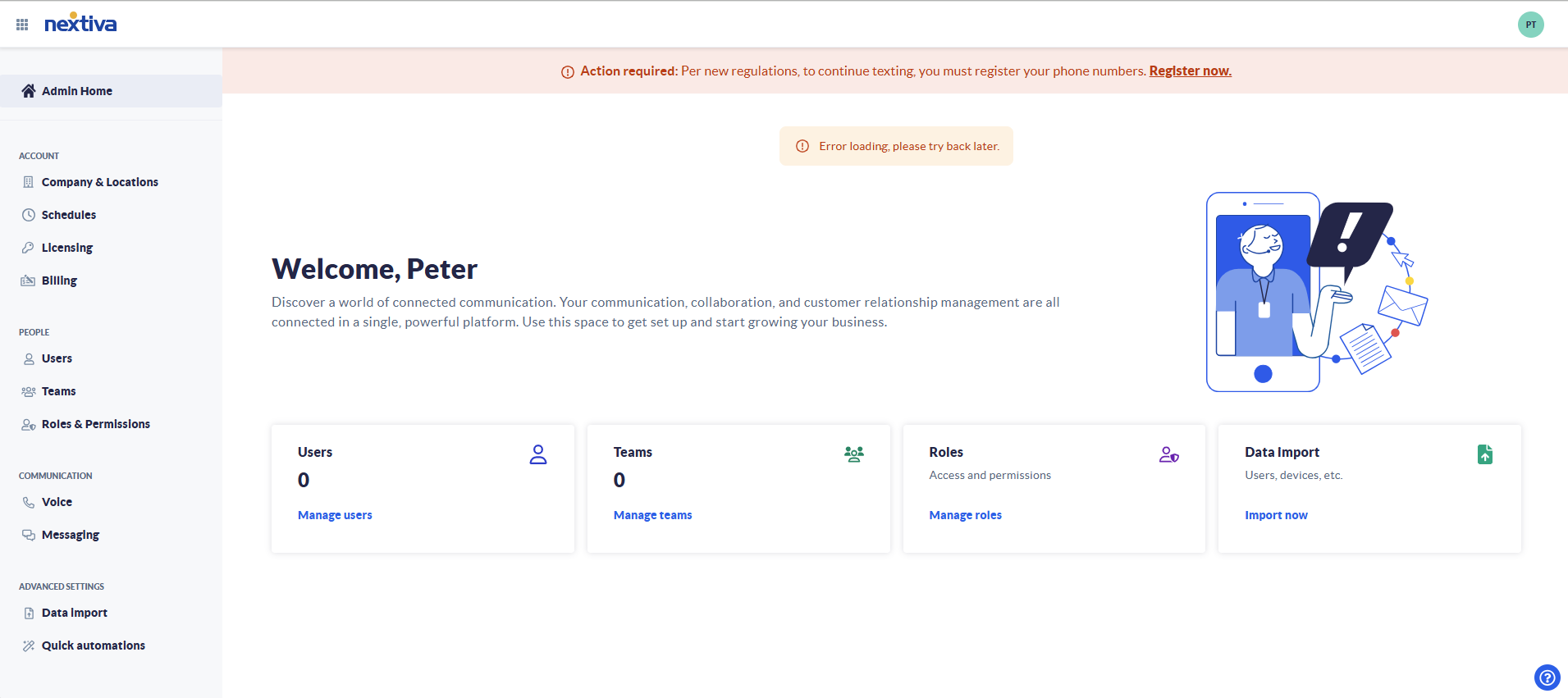
For instructions on how to configure this feature, choose the image that looks most like your screen once logged in.
 |
Setup
- Log in to the Platform voice portal as an administrator.
- Click on Users.
- Hover over the user you want to adjust, click the vertical ellipsis, and select Voice Settings from the dropdown menu.
- Click Call Routing on the left-hand side of the page.
- Scroll down and click on Shared Call Appearance to expand the section.
NOTE: The NextivaONE application will be present as a Shared Call Appearance.
Available Settings
-
- Allow click-to-dial from all devices for this user - All devices will ring for click-to-dial calls.
- Alert all devices when a group page or announcement is sent - Group page will ring to all devices, not just the primary.
- Allow active calls to be retrieved or pulled to other devices - Allows for calls to be pulled between the primary and shared devices.
- Allow multiple calls at the same time from any device - Requires Enterprise, Core, Engage, or Power Suite licenses. Allows multiple devices to be used on the same line at the same time.
- Allow calls to be put on hold and picked up on any other device - Lets calls be put on hold and retrieved from another shared device.
- Allow others to bridge or join an active call from any other device - Allows people to join an active call from a shared device.
- Enable call decline across devices - When you decline/reject a call on one device, it declines the call on all shared devices. By default, it only declines the call on the device you pressed decline on.
- Bridge Warning Tone - Notice that someone has joined from a shared device.
- Allow click-to-dial from all devices for this user - All devices will ring for click-to-dial calls.
If any changes were made, click Save.
Add Appearance
- Scroll down and click Add appearance.
- Select the device or MAC address.
- In the Name of Line/Port field, enter a unique alphanumeric identifier for the device, such as the MAC address and user extension combined (e.g.,
64167F237742x1002). - Check the boxes to control the shared call appearance options
- Make this device active – Enable the user on the shared device.
- Allow calls to originate from this device – Let this shared device make outbound calls for this user.
- Allow calls to be terminated using this device – Let this shared device answer inbound calls.
- Make this device active – Enable the user on the shared device.
- Click Save.